The Flappy Nappies Story
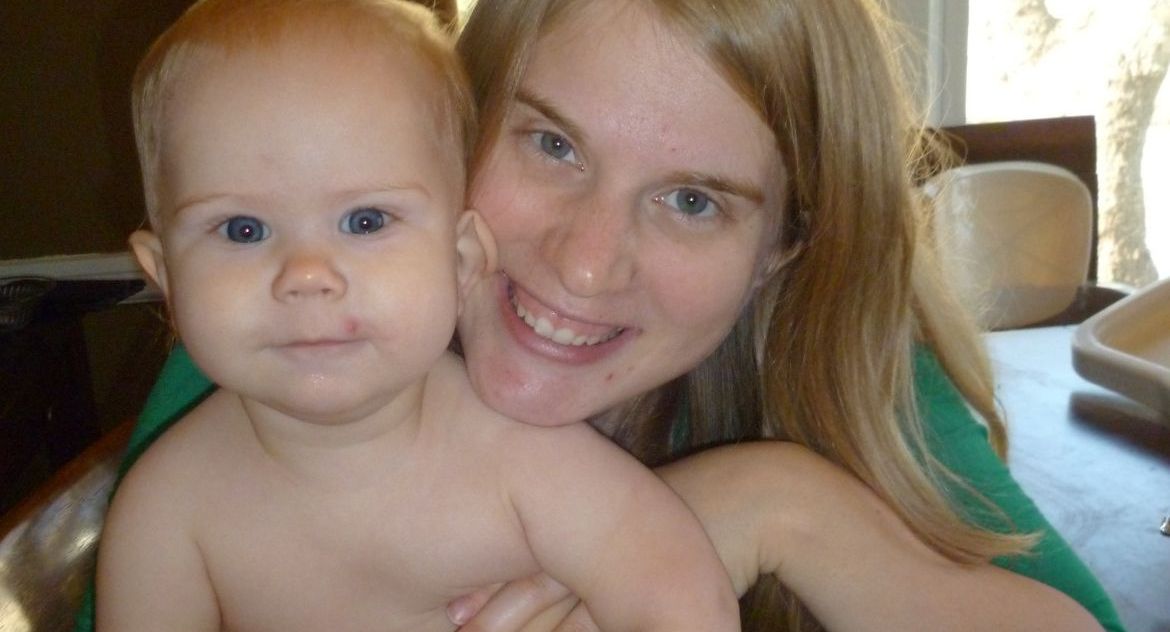
Some families pass down vintage Christening gowns, pewter baby spoons, or gold lockets as treasured family heirlooms to new mothers. My mom passed down a different treasured heirloom to me when my first baby was born: Our little potty. Story by Chelsea McAmis.
When I was 10 months old, my family relocated to Germany and my mother befriended a British woman who had been offering her 10-month-old daughter the potty ever since she was 6 months old. My mother, who was potty training my two-year-old sister at the time, immediately introduced me to the potty as well. My sister and I trained at the same time on the same little potty, which my mom took everywhere with us—on trains, hiking through the Alps, you name it! The potty came with us. You can read her story in part one of this series.
I grew up hearing the story of how I learned to use the potty before I could walk. Even before I had kids of my own, I was a proponent of early potty learning. I believed that babies should be introduced to the potty before their first birthday, but it wasn’t until my sister discovered Christine Gross-Loh’s book “The Diaper Free Baby” that I learned that infant potty training, now commonly referred to as elimination communication (EC), could begin as young as birth.
I read that book when my first baby was still a newborn. Even with this newfound knowledge and knowing my own potty-training story, I hesitated to begin. Being a new parent is tough. All our preconceived convictions tend to crumble when we hold that new baby in our arms. We ask—is this really the right thing to do? It can be especially tough to make a parenting choice that goes so far against the grain of conventional parenting—even for someone like me, for whom early potty training was more of a norm.
One day when my son was about six weeks old, I decided to make the leap. My son always had a big poop first thing in the morning. In fact, I had already been trained to watch out for it because it was usually a blowout. Every morning I would whip off his jammies and let him make a mess of his diaper on the changing pad. That morning, though, I whipped off the diaper too and held him over the toilet. He went immediately! What was once a giant mess to clean up became a single wipe on the bum and a flush of the toilet. I was amazed, but also felt pretty silly for allowing him to make such a mess every morning when I could have been taking him to the toilet this whole time!
Over the next couple of weeks my husband and I found that our son seemed to mostly poop right after waking up from naps in addition to his morning poop. We very quickly got into a routine of taking him potty right after he woke. Up until that point, I believed that we had merely trained ourselves to anticipate our son’s needs. Then when my son was about eight weeks old, we went to spend the weekend at a family member’s house. While there, I thought our hosts might think it was “weird” if I sat on the toilet with my newborn, so I decided to just let him have his big morning poop in his diaper. I sat with him on the changing pad for a bit, waiting for him to go, but he just squirmed and fussed. This went on for quite some time. Finally, I realized that my son was waiting for me to take him to the toilet. I pulled off his diaper and sat with him on the toilet and he immediately pooped! I realized that day that this was NOT a one-sided conversation, but a mutual relationship that my son and his parents were forming together. By the time our son was two months old, we were catching about 95% of his poops and a couple of pees every day. We still had him in diapers most of the time, but poopy diapers became so rare that when they happened, my husband and I would be running around the house like chickens with their heads cut off, screaming, “POOP! There’s POOP! WHAT DO WE DO???” When my son was almost five months old, we took him to my grandmother’s house for Thanksgiving. She had used cloth diapers with all of her babies and very much approved of what we were doing with our son. One evening as we sat in the living room, I thought my son might need to pee, so I laid him down, took off his pants, unsnapped his onesie, removed his diaper cover and the fitted diaper underneath, and then sat him on the little potty. She said to me, “You know, his clothes really get in the way of taking him to the potty.”
That was the moment that an idea lit up in my mind. I needed a diaper that facilitated the EC process while still providing reliable backup for misses. I wrote down every feature that I wanted for my diaper:
It needed to be a drop-flap diaper that could open and close quickly for pottytunities without being removed from the baby.
It needed to be able to open from the front or the back.
It needed a means of covering the baby’s legs in the wintertime.
When the diaper was wet, I needed to be able to pop it off and change it quickly without having to lay my baby down on a changing pad.
It needed to be an all-in-one, adjustable diaper that would grow with my baby.
It needed about half the absorbency of a typical pre-fold diaper since I aimed to keep my baby dry and always changed his diaper as soon as it was wet. This would also mean that the diaper would be slimmer and sleeker than a typical cloth diaper.
It also needed a pocket in case I did need extra absorbency for naps, car rides, or other situations.
I searched the internet and found quite a few drop-flap diapers, but all of them opened only from the front and not the back (or vice versa) and most of them needed to be completely changed if they were soiled or wet. Most of them did not provide any kind of leg coverage either. NONE of them ticked every single one of my boxes.
So I made my own! I called them Flappy-Nappies. My design included a diaper and a detachable, reusable belt. The fully detachable belt allowed the diaper to be opened from either the front or the back (but remain attached to the baby) during potty trips. It also meant that the belt could stay on the baby all day unless it was soiled with poop, allowing the diaper itself to be quickly and easily attached or detached even if the baby was crawling, walking, or cruising away from me.
I went through three prototypes with my first son, improving on each one of them based on feedback from my husband, family, and friends. It was springtime when I put him in his first Flappy-Nappy, but by the time winter rolled around again I had devised a pair of crotchless pants called Chappy-Nappies. The Chappies replaced the belt entirely, allowing the diaper to be snapped directly to the waistband of the pants. This meant that the easy-breezy potty trips and diaper changes I’d enjoyed all summer were never compromised by a pair of pants when it was cold!
By the time my second son was fully potty trained I had perfected my Flappy-Nappy design and even added a few other compatible garments such as Chappy-Nappy shorts for summertime and Sassy-Nappy skirts for girls. I have future plans to design other garments such as rompers, dresses, and overalls as well. My design is officially patent-pending and available for purchase on my Etsy page (The Lucky Lion Boutique) so that others can benefit from the diapers as I have. Meanwhile, the little potty my mother used for my sister and me in the Alps now lives in the trunk of my car, travelling everywhere with us and enjoying frequent use by both of my EC graduates!
She said to me, “You know, his clothes really get in the way of taking him to the potty.” That was the moment that an idea lit up in my mind.




Step-by-step guidance for elimination communication from birth to toilet independence.
Continue reading
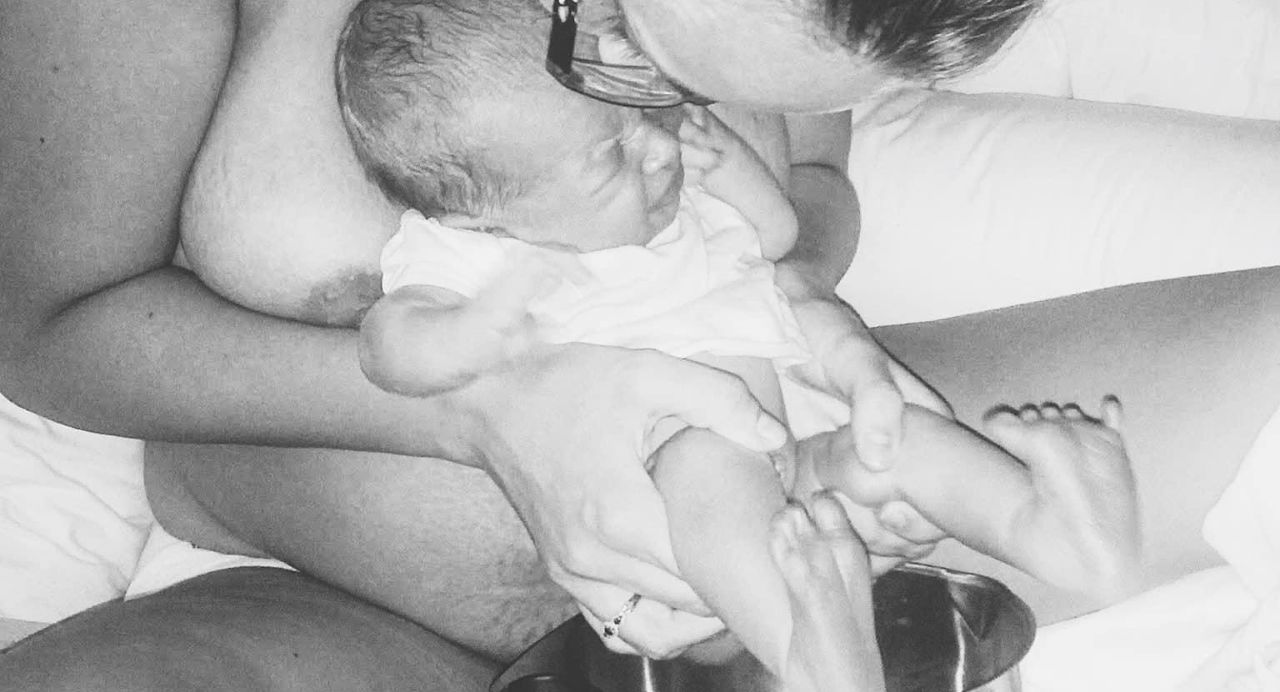
Ready for elimination communication
I just came across this raw shot from 2012.

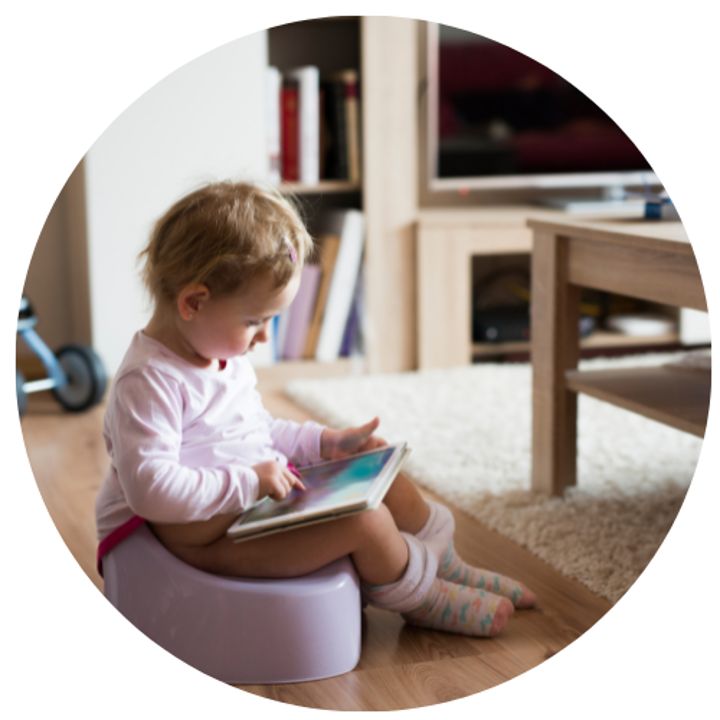
Brain Building with Elimination Communication
Still, very few (Western) parents have heard that you can potty a newborn. The once-standard healthy practice has been replaced with a relaxed attitude that a c