Travelling with Your Elimination Communication Baby
Nappies can be bulky to travel with, and what do you do with the dirty ones?
Here are some tips tried and tested.
Acknowledgments: Sonia Barish (Potty Plan Facilitator, www.backtothewild.co.nz) and Rebecca Larsen (EliminationCommunicationBabies.com).
Don’t Let Having a Baby Stop Your Adventures
Before any hike or travel, work on establishing your toileting routine with baby.
Treat nappies/diapers as backup.
Offering the toilet on a regular basis will help establish this normal elimination pattern for your baby so that when you are off hiking, in airports or travelling with baby, toileting is as normal for you as it is for baby.
Once you have established a reliable pattern for your baby’s poop, you could consider a hike nappy-free.
- Choose quick-dry clothing.
- Offer regular toilet breaks.
- You won’t need to carry dirty nappies around, saving unnecessary weight on your hike.
- Your baby’s used nappies could weigh around 4kg and take up around 20 litres of pack space.
A Variety of Toilets
When you are out with your baby, take the opportunity to visit bathrooms and offer the opportunity to your little one.
Make this process normal and positive.
If you are not comfortable in public washrooms, this feeling will rub off on your child. Try and keep this experience positive while being hygienic.
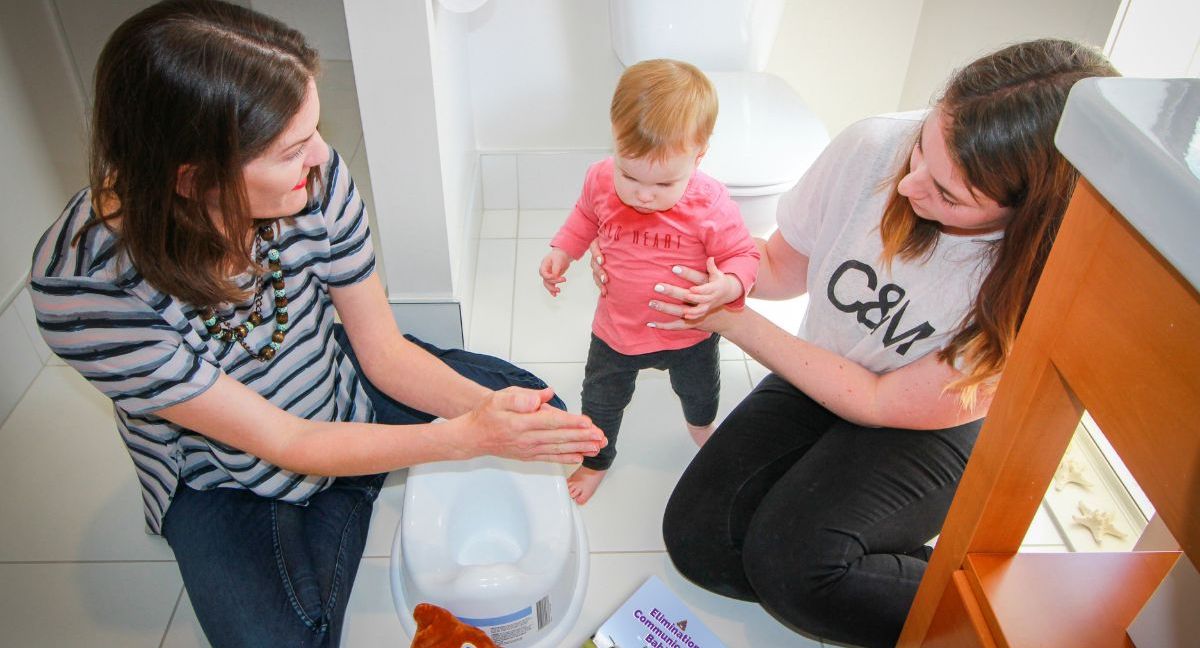
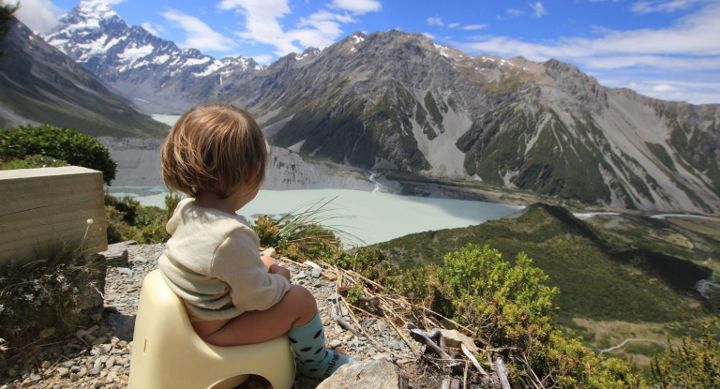
Packing your own potty is also an option and sometimes easier.
Simply discard the waste and use your wipes.
If you’ve established a toilet routine with your baby, you will likely know when they will need to poop.
Packing a Potty
Packing a potty for your trip will provide handy if needed during the night, off the beaten track or if toilets are unreliable.
If hiking, carry it in a dry bag clipped to the outside of your pack.
Many small potties will fit inside a carry bag and can easily be cleaned on the go.
Stop Often
Offering frequent toilet opportunities will help your baby feel comfortable.
If this is not possible, focus your toileting efforts on the time your child usually poops and use nappies as backup.
Remember that babies will need to wee more frequently than adults.
Night Needs
When babies stir in the night, it’s often a sign they need to pee.
Learn this cue and you may not even need the diaper/nappy.
Babies can be held out to pee even when they are half asleep.
Instinct kicks in, and as long as they are relaxed they will eliminate.
Quick Carry-on Pack List
- Diapers individually wrapped in a ziplock (handy to grab one when needed, and can then contain the diaper afterwards)
- Wipes (or individually wrapped damp-wipe cloths)
- Light-weight change mat
- Change of clothes for baby
- Change of top for yourself (possibly change of clothes)
- Portable toilet seat insert (if using one)
- Pacifiers / Dummies (if using)
- A favourite comfort toy, a new toy (small and without noise)
- Bibs (if using)
- Cotton burp cloths / all-purpose cloths both for wraps and spills
- Wet bag or zip locks for washing
- Special food for the baby if it is not provided
Be Prepared in Case You Get Held Up on Route
Where possible, use public toilets before you board.
Toilets inside of vehicles are small on room.
Inside the aeroplane, the changing table folds down above the toilet. It is awkward and unpleasant, but you may find the need to use these facilities. Bring wipes.
Often times when in transit people do withhold stool and this was the case for us. Once landed, the public toilets are suddenly much more appealing than normal.
While in transit:
- Offer small toys that are unfamiliar.
- If you are planning to use a relaxation supplement, trial it while on the ground first to determine the reaction.
- Never take any drugs for the first time then fly in case of a bad reaction (this has happened to me, and was the most frightening experience). Always consult a Doctor.
- Practise releasing ear pressure with baby by yawning.
- Breastfeeding can help release pressure in the ears as well.
- Don’t overfeed while in transit to avoid sick-up (or blow-out).
- Take it one moment at a time.
- Try and keep your baby’s routine as normal as possible.
For example, if you offer the toilet after a snack at home, try and do the same on your journey.
Move meal times along with the journey to help your baby adjust to the time difference.
Happy Travels
Don’t be afraid to ask for help when you need it.
Have baby. Will travel. Happy travels!
Ready to Get Started with Elimination Communication?
If this story has inspired you to try Elimination Communication for your baby, we invite you to:
- Start with our book Elimination Communication Babies
- Join our Elimination Communication and Cloth Facebook Challenge
- Join our peer-to-peer support group on Facebook ‘Elimination Communication Babies Support’
Photos
Step-by-step guidance for elimination communication from birth to toilet independence.